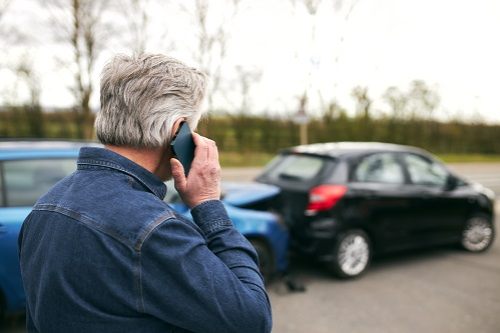


How does insurance work if someone who isn't on your insurance crashes your car?
In most cases, a driver not listed on your insurance will be automatically covered by your policy as long as they have permission to drive your car. Most insurance policies cover permissive use of your vehicle, but there are exceptions, so verify before you lend out your car.
There are a few scenarios to consider regarding state laws and fault that will affect how insurance applies after an accident.
- If a permissive driver is at fault for an accident, your insurance will provide the same coverage as if you were the one driving. This includes your liability coverage for damage to others and collision coverage for damage to your vehicle. This applies in both no-fault and tort (fault) states.
- In a no-fault state, your PIP coverage will pay for any injuries to the permissive driver, regardless of fault.
- In a tort state, there is no coverage for injuries to an at-fault driver; they will use their health insurance.
- If a permissive driver is not at fault in the accident, the at-fault driver's insurance is responsible for paying for both physical damage and injuries.
What happens if the driver did not have your permission and crashes your car?
In the event that someone takes your car without permission and crashes it, your insurance may refuse to cover the damage, either to your car or to the other party's car, if a second vehicle is involved.
However, it's vital to understand that there are two types of permissive use for people not listed on the policy:
- Explicit permission: The other person asked if they can use your car, and you said yes.
- Implicit permission: The other person has a reasonable belief that they have permission to drive your car. For example, a babysitter who has been told in the past that they can use your car to take the kids on outings may not ask for explicit permission each time, because permission is implied.
If the driver had neither form of permission to use your car, your insurer may deny the claimAn insurance claim is a request you make to your insurance company for coverage after your car is damaged or you have an accident. You can file a claim online, by phone, or in writing..
Does your insurance follow the vehicle or the driver in a crash?
Generally, car insurance follows the car rather than the driver. That means that the coverage on that vehicle applies regardless of who was driving it, as long as that person is either listed on the policy or driving with permission.
An exception to that is non-owner insurance, which is a policy specifically for people who don't own a car, and provides liability insuranceLiability insurance covers sums that an insured becomes legally obligated to pay because of bodily injuries or property damage, or financial losses caused to other people. only for that driver. If a permissive driver has such a policy, it will be secondary to the owner's policy, which means it kicks in when those limits are exceeded.
Do premiums go up after an accident caused by an unlisted driver?
Yes, your insurance will likely go up if an unlisted driver is at fault for an accident when driving your car. Any claim that is filed against your insurance has the potential to increase your rates.
A single at-fault accident raises rates by $1,067 a year, on average.
When you allow someone to drive your vehicle, you assume liability for what they do behind the wheel, because it's your car. Always consider that risk when you allow someone else to drive your car.
Permissive use accidents and insurance: Bottom line
Because car insurance follows the vehicle and not the driver, anyone driving your car with your permission will be covered by your policy as if you were the one behind the wheel. However, there are exceptions, such as, and not all policies cover permissive use the same way.
Before you lend out your car, check with your insurance company to be sure you're covered.
FAQ: Accidents when someone else is driving your car
What if the unlisted driver has no insurance?
Whether or not the driver has insurance doesn't matter when they are driving your car. A driver does not need to have insurance to drive your car or be covered by your insurance as a permissive driver.
Can my insurance deny a claim if I lend out my car?
Yes, if the car's use was in violation of the insurance contract, the claim could be denied. Violations of the contract can include allowing an unlicensed or suspended driver to drive your car or allowing an impaired driver to drive.
Can someone drive your car if they are not on your insurance?
Yes, someone can drive your car if they are not on your insurance, as the policy generally covers the car itself, not the driver. Based on the terms of your policy, your insurance will provide coverage for your car even if someone else driving gets involved in an accident.
Does full coverage cover other drivers?
Yes, full coverage applies to permissive use drivers. All of the coverages on your policy follow the car, regardless of who is driving, as long as that driver falls within the policy's permissive use guidelines.

 Helpful auto insurance tools and calculators
In case you missed it
Stay updated with our latest insurance insights and guides
 August 25, 2025
Every state has penalties in place for driving without insurance or proof...
Read article