

1. Call 911
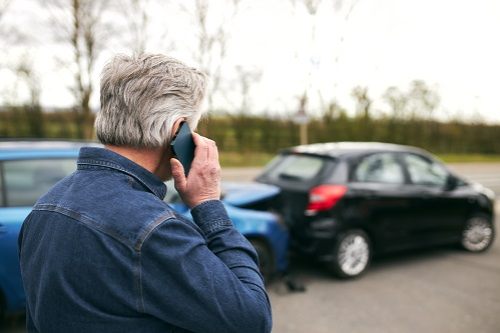
Calling 911 after a car accident ensures that injuries are addressed and the incident is officially documented. After a crash, check yourself, your passengers, and others for injuries, and call 911 if anyone is hurt, vehicles are blocking traffic, the other driver leaves the scene, or there is major damage.
Even if it's just a fender-bender, "it's always good to have authorities on the scene to document and report what happened," says Anthony Noviello, assistant vice president in the claims division for Amica, based in Lincoln, R.I.
However, there are times when law enforcement won't respond. In bad winter weather, for example, the police may respond only to accidents involving injuries, explains Mary Bonelli, senior vice president of public information for the Ohio Insurance Institute.
Police also may refuse to respond if an accident occurs on private property, like a mall parking lot, says Brandon Sutkowi, vice president at Meadowbrook Insurance Agency in Saginaw, Mich. If police are there, get the police report number, along with the officer's name and badge number.
2. Take photos of the vehicles and the accident scene
Taking photos of the vehicles and the accident scene documents the damage and supports your insurance claim. Once everyone is safe and you have called for help, start documenting the accident scene with photos and videos.
Noviello recommends taking photos before the vehicles are moved to the side of the road. If the cars haven't been moved, the photos will document the point of impact between the vehicles. Photos should be forwarded to your car insurance company for claims purposes, he says.
"The information that your insurer will need to investigate is normally available at the accident scene," says William Brower, assistant vice president for claims for Boston-based Liberty Mutual Insurance. "However, it can be very time-consuming to collect this information if the details aren't captured at the accident scene."
3. Exchange personal and auto insurance information
Exchanging personal and auto insurance information ensures that both parties have the details needed to file claims and verify coverage. Even if the police arrive, exchange personal and car insurance information with the other driver.
Brower says to take a close-up photo of the insurance information and driver's license. And Noviello says that if the driver is not the vehicle owner, get the owner's information as well. This provides accurate documentation.
"There are situations where people make up information," such as when they are uninsured, Bonelli says.
4. Gather information about the other vehicle
Gathering information about the other vehicle helps identify the car involved and supports your claim, especially in disputes or hit-and-run situations. Write down or photograph the other vehicle’s make, model, color, year and license plate number, and note visible damage and where the car was hit.
This information is especially important after a hit-and-run. If the other driver leaves, try to remember the license plate number, vehicle color, vehicle type, and direction of travel. If you can, take a quick photo with your phone.
Do not chase the driver. Move to safety and give the information to the police and your insurer.
5. Collect information from witnesses
Collecting information from witnesses provides independent accounts that can support your version of events and clarify what happened. If anyone saw the accident, ask for their name and contact information.
Witnesses can help confirm what happened if drivers disagree or if the other driver leaves the scene.
Collect the witnesses:
- Name
- Phone number
- Email address
- Short description of what they saw
Witness information can be especially helpful after a hit-and-run because a witness may have seen the fleeing vehicle’s license plate number or direction of travel.
Do not coach witnesses or ask them to blame anyone. Just ask whether they are willing to share what they saw with the police or the insurance company.
6. Admit facts, not fault
Admitting facts but not fault ensures that you provide accurate information without affecting how liability is determined. Be honest, but do not admit fault at the scene, because fault is determined later by police, insurers, and sometimes state law.
If you spilled coffee on your lap before rear-ending the car in front of you, let the police know.
"You always want to tell the truth [about] what happened," Noviello says. Those facts are then used to determine fault and liability. Bonelli agrees that you should not comment about the accident unless answering questions from police. Otherwise, "you don't know how it could be misinterpreted."
7. Contact your car insurance company or agent
Contacting your car insurance company or agent starts the claims process and allows your insurer to begin evaluating the accident. Contact your insurer or agent as soon as you can after the accident.
If your agent’s office is closed, call the claims number on your insurance card or use your insurer’s app or website.
Noviello recommends calling your insurer "as soon as [is] practicable after an accident," because the sooner you call, the sooner the company can start processing the claim.
FAQ: Steps before filing a car insurance claim
Should I call the police after a minor car accident?
Yes, you should call the police even after a minor car accident if anyone is injured, vehicles are blocking traffic, the other driver leaves, or the law requires a report. If the police do not arrive at the scene, ask how to file an accident report later.
Do I have to file a claim after every accident?
No, you do not have to file a claim after every accident if the damage is minor, no one is injured, and repair costs are below your deductibleThe deductible is the amount you pay out of pocket for a covered loss when you file a claim., but you should contact your insurer if another driver is involved, fault is disputed, or injuries are reported.
What should I send to my insurance company after an accident?
You should send your insurance company photos, videos, the police report number, driver and insurance information, witness contact details, and a clear description of what happened, along with any repair estimates or receipts.
What should I do if the other driver leaves the scene?
If the other driver leaves the scene, you should note the license plate number, vehicle details, and direction of travel, then call the police and contact your insurer. Do not attempt to chase the driver.

 Helpful auto insurance tools and calculators
In case you missed it
Stay updated with our latest insurance insights and guides
 August 19, 2026
Adjusters review repair costs, salvage value, state rules and the car’s pre-accident...
Read article May 1, 2026Compare car insurance companies from multiple angles to find the best price,...
Read article April 6, 2026Car insurance is tax-deductible if you use your vehicle for business, such...
Read article April 6, 2026Most car accident settlements are not taxable, but punitive damages and payments...
Read article September 1, 2025Accidents or tickets can raise your car insurance rate because you are...
Read article July 11, 2025Self-insured car insurance is an option in some states and puts financial...
Read article July 10, 2025Accident forgiveness is a car insurance option that prevents your rate from...
Read article