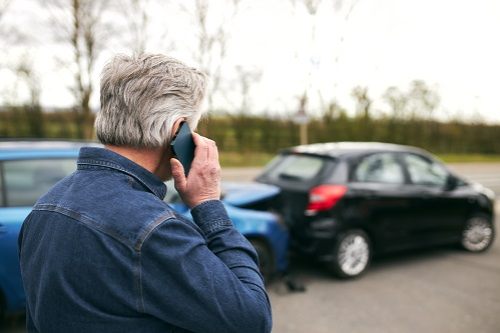



What is uninsured/underinsured motorist coverage?
Uninsured/underinsured motorist coverage (UM/UIM) pays for your injuries and damages when the at-fault driver has no insurance or carries limits too low to cover the full cost of the claimAn insurance claim is a request you make to your insurance company for coverage after your car is damaged or you have an accident. You can file a claim online, by phone, or in writing..
| Uninsured motorist | Underinsured motorist |
|---|---|
| The driver did not buy insurance, or their insurance has lapsed | The driver has insurance, but it's not enough to cover the entire claim |
| Driver is on the road illegally and has no coverage | Driver is on the road legally and may have state minimum coverage |
"Let's say you're driving to the store today, and some 19-year-old [without insurance] plows into the side of your car," says Dave Emmette, chief operating officer and risk advisor at River Valley Insurance in Lowell, Michigan. "That's the type of scenario that plays out across the country every day, and in many cases, those who are hit by an uninsured driver may find they are stuck with expensive medical bills and other costs."
When do uninsured and underinsured motorist coverage apply?
Uninsured motorist coverage kicks in when:
- The at-fault driver has no car insurance
- The other driver's insurance company denies their claim or can't pay it
- The driver leaves the scene and can't be located (hit-and-run), although this may only apply to injuries
Underinsured motorist coverage kicks in when:
- The driver has at least the minimum insurance required by law, but it isn't enough to cover the damage
People ask
Do I need uninsured motorist coverage if I have collision and comprehensive coverage?
Yes, because collision coverageCollision coverage helps pay for repairs or replacement of your car if it's damaged in an accident, regardless of who is at fault and is subject to a deductible. doesn't cover bodily injury when you are struck by an uninsured driver. While both coverages can pay for vehicle damage, only uninsured motorist coverage includes bodily injury protection for you in an accident caused by an uninsured driver.
What does uninsured motorist coverage cover?
Uninsured/underinsured motorist coverage pays for damages or injuries caused by another driver who is either uninsured or doesn't have enough insurance to cover the claim in full. There are two types of uninsured/underinsured motorist coverage: bodily injury and property damage.
- Uninsured/underinsured motorist bodily injury coverage. This covers injuries caused by an uninsured or underinsured motorist who is at fault for the accident.
- Uninsured/underinsured motorist property damage coverage. This covers property damage done by an uninsured or underinsured motorist.
If you carry both, then you'll have protection for both medical bills resulting from an accident with an uninsured or underinsured driver and the damage they do to your car or property.
Does uninsured motorist insurance cover a hit-and-run?
UM/UIM coverage covers hit-and-run damage in most states. Six states do not allow drivers to use UMPD coverage for hit-and-run damage:
- California
- Colorado
- Georgia
- Illinois
- Louisiana
- Ohio
In these states, collision coverage is required to pay for damage to your car.
How much does uninsured motorist insurance cost?
The average cost of uninsured/underinsured motorist coverage is $199 a year. Most insurance companies will require you to carry the same limits for UM/UIM as your liability limits, which means the cost will be impacted by your chosen limits.
The best way to see what UM/UIM insurance will cost you is to compare car insurance quotes from several companies.
How does uninsured/underinsured motorist coverage work?
To illustrate how uninsured/underinsured motorist coverage works, let's take the hypothetical example of a driver we'll call Jade.
Jade lives in Arizona, where the state minimum liability limits are 25/50/15, but she carries uninsured/underinsured motorist coverage equal to her liability limits of 100/300/100.
Jade's car is sideswiped by another vehicle and she crashes into the median. She's lucky to sustain only minor injuries, but her $45,000 car is a total loss.
The other driver carries only the state minimum, which means their insurance will only pay a maximum of $15,000 for Jade's car.
She files a claim against her underinsured motorist coverage, which pays the balance of her car's value. Without UIM insurance, Jade would have been out of pocket by $30,000.
This may differ if you're dealing with an injury claim, especially in a no-fault state where your personal injury protectionPersonal injury protection (PIP) pays for your medical, hospital and funeral expenses resulting from a car accident, regardless of who's at fault. (PIP) will apply first to your medical bills.
If the other driver has no insurance at all, however, you will need to work solely with your own insurance company for an uninsured motorist claim.
Types of uninsured/underinsured motorist coverage and limits
Uninsured/underinsured motorist coverage is available in two limit structures: split limit and combined single limitCombined single limit (CSL) auto insurance policies have a single liability payment limit for both property damage and bodily injury.. Split limit plans set separate maximums for bodily injury per person, bodily injury per accident and property damage. Combined single limit plans, available in a small number of states, set one dollar amount that can pay for any combination of bodily injury and property damage claims.
- Split limit plans have separate coverage levels for UMBI and UMPD. For example, they may be written as $50,000/$100,000/$25,000, providing coverage of $50,000 per person, subject to a maximum of $100,000 per accident for bodily injury and $25,000 for property damage.
- Combined single limit plans are offered in a small number of states, where one coverage level can pay for both UMBI and UMPD. For instance, a $100,000 policy will pay for up to that amount of UM claims, regardless of whether or not they are related to bodily injury or property damage.
Combined single limit policies are more flexible, but split limit plans may be less expensive.
Furthermore, in some states you can purchase just uninsured motorist coverage separately from underinsured motorist.
Stacking uninsured motorist and uninsured motorist bodily injury insurance
In some, but not all, states, you can elect to stack your uninsured motorist bodily injury and/or underinsured motorist bodily injury coverage. Here's how it works:
- In a two-vehicle household where each vehicle has UMBI limits of 100/300, the maximum payout is $100,000 per person and $300,000 per incident.
- With stacked UMBI coverages, the limits would double to 200/600.
In general, there is no limit on the number of vehicles that can be insured with stacked UMBI coverage. If you only have one car on your policy, then stacking is not an option for you, but if you have multiple vehicles, stacking can be one of the perks of multi-car insurance.
Even if your state allows stacking, not all car insurance companies offer the option.
People ask
Is there a deductible for uninsured motorist?
Whether UM/UIM coverage carries a deductible depends on your state and your insurer. Some states require no deductible at all; others allow a deductible but cap the maximum amount by law. If your state permits a deductible, your insurer's specific guidelines will determine the exact amount. Check your policy declarations page or ask your insurer directly for the deductible that applies to your UM/UIM coverage
How to file an uninsured/underinsured motorist claim
To file an uninsured or underinsured motorist claim contact your insurance company's claims department by phone or online and provide the details of the incident. Follow these steps:
- Call your own insurance company immediately after the accident, regardless of who appears to be at fault.
- Report the accident and request that your insurer open a UM or UIM claim file.
- If the other driver has no insurance, your insurer will process the claim entirely through your UM coverage.
- If the other driver has insurance, wait until the full cost of damages is known to determine whether their limits are sufficient before invoking UIM coverage.
Until the full cost of the damages is known, you won't know if the other driver has enough insurance. However, if they have no insurance, your insurer can take steps right away to process an uninsured motorist claim.
People ask
What is the difference between uninsured and underinsured motorist coverage?
Uninsured motorist coverage (UM) pays when the at-fault driver has no insurance at all. Underinsured motorist coverage (UIM) pays when the at-fault driver has insurance, but their limits are too low to cover your full damages. Both coverages are often sold together but may be available separately in some states.
Does filing an uninsured/underinsured motorist claim raise my raise?
Filing an uninsured motorist claim does not automatically raise your rates, because UM/UIM claims are triggered by another driver's fault, not yours. Most states prohibit insurers from surcharging policyholders for not-at-fault claims. However, insurer policies vary, and in states without explicit protections, some companies may factor UM claims into renewal pricing. Check your policy or ask your insurer directly whether a UM claim could affect your premium before filing.
Are uninsured motorist and uninsured motorist bodily injury coverages required?
UM and UIM coverage is voluntary in more than half of U.S. states, but some do require it. The following chart lists the states with uninsured drivers' insurance requirements and indicates the type of coverage that is mandated.
State requirements are shown for uninsured motorist, bodily injury (BI), uninsured motorist property damage (UMPD) coverage, and underinsured motorist property damage (UMIPD) coverage, along with required coverage limits.
States with UM and/or UIM requirements
| State | Insurance required | Minimum liability limits |
|---|---|---|
| Connecticut | BI & PD Liability, UM, UIM | 25/50/25 |
| Washington, D.C. | BI & PD Liability, UM | 25/50/10 |
| Illinois | BI & PD Liability, UM, UIM | 25/50/20 |
| Kansas | BI & PD Liability, PIP, UM, UIM | 25/50/15 |
| Maine | BI & PD Liability, MED, UM, UIM | 50/100/25 |
| Maryland | BI & PD Liability, PIP, UM, UIM | 30/60/15 |
| Massachusetts | BI & PD Liability, PIP, UM | 20/40/5 |
| Minnesota | BI & PD Liability, PIP, UM, UIM | 30/60/10 |
| Missouri | BI & PD Liability, UM | 25/50/25 |
| Nebraska | BI & PD Liability, UM, UIM | 25/50/25 |
| New Jersey | BI & PD Liability, PIP, UM, UIM | 25/50/25 |
| New York | BI & PD Liability, PIP, UM, UIM | 25/50/10 |
| North Carolina | BI & PD Liability, UM, UIM | 50/100/50 |
| North Dakota | BI & PD Liability, PIP, UM, UIM | 25/50/25 |
| Oregon | BI & PD Liability, PIP, UM, UIM | 25/50/20 |
| South Carolina | BI & PD Liability, UM | 25/50/25 |
| South Dakota | BI & PD Liability, UM, UIM | 25/50/25 |
| Vermont | BI & PD Liability, UM, UIM | 25/50/10 |
| Virginia | BI & PD Liability, UM, UIM | 50/100/25 |
| West Virginia | BI & PD Liability, UM | 25/50/25 |
| Wisconsin | BI & PD Liability, UM | 25/50/10 |
*Required if policyholder chooses to purchase limits higher than $25,000/$50,000.
UM and/or UIM coverage is required in 22 states and Washington, D.C. In all other states, coverage is optional. Because the national uninsured driver rate is 15.4% and UM/UIM costs an average of $199 a year, most insurance experts recommend carrying it regardless of state mandates.
How much uninsured motorist coverage do I need?
Set your uninsured motorist limits equal to your liability limits. Most insurers will not allow UM/UIM coverage higher than your existing liability limits, and experts recommend matching the two. As Dave Emmette, chief operating officer at River Valley Insurance, advises: if your bodily injury limit is $500,000, your uninsured coverage should be the same.
"If your bodily injury limit is $500,000, your uninsured coverage should be the same," Emmette says. What's more, some insurers may limit you to UM coverage that is no greater than your other liability limits.
Uninsured motorist rates by state: What's your risk level?
Nationwide, 15.4% of drivers are uninsured. Mississippi has the highest uninsured driver rate at 28.2%, followed by New Mexico at 24.1% and Washington, D.C. at 23.1%. Maine has the lowest rate at 5.7%.
Take a look at the states with the highest and lowest rates of uninsured drivers, based on the most recent Insurance Information Institute data, below.
| Rank | State | Percent uninsured |
|---|---|---|
| 1 | Mississippi | 28.2% |
| 2 | New Mexico | 24.1% |
| 3 | Washington, D.C. | 23.1% |
| 4 | Michigan | 22.3% |
| 5 | Tennessee | 21.3% |
| 6 | Missouri | 20.7% |
| 7 | Florida | 20.6% |
| 8 | California | 20.4% |
| 9 | Colorado | 19.5% |
| 10 | Washington | 19.1% |
| Rank | State | Percent uninsured |
|---|---|---|
| 1 | Maine | 5.7% |
| 2 | Utah | 6.2% |
| 3 | Idaho | 6.4% |
| 4 | Wyoming | 6.7% |
| 5 | Montana | 7.2% |
| 6 | West Virginia | 7.8% |
| 7 | Massachusetts | 7.9% |
| 8 | New York | 8.6% |
| 9 | South Dakota | 9.4% |
| 10 | Nebraska | 9.5% |

 Helpful auto insurance tools and calculators
In case you missed it
Stay updated with our latest insurance insights and guides
 May 28, 2026
The average full coverage car insurance cost is $2,578 a year nationwide....
Read article May 18, 2026Temporary car insurance is unusual, but options for short-term car insurance coverage...
Read article May 15, 2026You need enough umbrella insurance to cover your assets from liability risks....
Read article April 22, 2026Non-owner auto insurance is liability-only car insurance for drivers who don’t own...
Read article April 17, 2026Comprehensive and collision insurance both cover damage to your car, but from...
Read article February 4, 2026Liability car insurance covers injuries and property damage to others when you’re...
Read article February 4, 2026Gap insurance covers the difference between the actual cash value of your...
Read article August 13, 2025Increasing your liability insurance may cost $50 to $200 more annually, depending...
Read article July 14, 2025FR-44 insurance is a certificate some states require after serious driving offenses....
Read article July 1, 2025PLPD insurance stands for Personal Liability and Property Damage. It covers injuries...
Read article June 19, 2025Broad form car insurance covers one driver with limited liability coverage. It's...
Read article