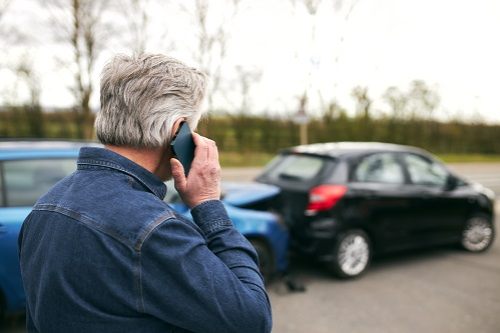



- 1. "No-fault insurance means it's not my fault!"
- 2. "The color of my car affects my insurance rate."
- 3. "My friend borrowed my car, so he's responsible for damages."
- 4. "My auto insurance company can cancel my policy at any time."
- 5. "A more expensive car costs more to insure."
- 6. "I got a ticket, so my car insurance rates will skyrocket."
- 7. "I don't need comprehensive insurance, because thieves don't steal old cars."
- 8. "The laptop in my car is covered by my auto insurance policy."
- 9. "I recently paid my insurance premium, so I won't need a new policy for my new car."
- 10. "My personal auto insurance covers both personal and business use of my car."
1. "No-fault insurance means it's not my fault!"
No-fault car insurance varies by state, but usually requires your auto insurance company to pay medical expenses and lost wages for injuries due to a car accident, regardless of who is at fault.
"After an accident, no-fault insuranceAn auto insurance system where medical expenses are covered by your insurer regardless of fault. Personal injury protection (PIP) and medical payments (MedPay) are no-fault insurance coverages. lets all parties get payment for their immediate medical needs while their insurance companies are deciding amongst themselves which company is going to pay for the accident," says Michael Petrarca, an assistant vice president at Amica Mutual Insurance Co. in Lincoln, R.I.
If you caused the wreck, it doesn't mean you're off the hook. The insurance companies determine who's to blame, and that party (and their insurer) are responsible for property repairs and other damages, he says. If you're responsible, you need collision to fix your vehicle. No-fault is for medical bills, not property damage. If another party is at fault, get their car insurance information so you can make a claimAn insurance claim is a request you make to your insurance company for coverage after your car is damaged or you have an accident. You can file a claim online, by phone, or in writing. under their property damage liability coverageAuto insurance coverage for losses that result when you damage or destroy someone else's personal property. This coverage is required in most states..
2. "The color of my car affects my insurance rate."
Auto insurance companies set rates based on the safety features of a vehicle and how much it costs to repair or replace the vehicle (among other factors about the driver). But the color of the car doesn't factor into the premiumThe payment required for an insurance policy to remain in force. Auto insurance premiums are quoted for either 6-month or annual policy periods., says Petrarca.
"Some makes and models generate more claims than others, and they're rated accordingly, but the color of a vehicle means nothing," he says.
3. "My friend borrowed my car, so he's responsible for damages."
"If you give someone permission to drive your car and that person crashes, it will be your insurance–not your friend's policy–that covers the damages," says Rebecca Doran, a senior corporate underwriter with Amica.
"For a personal auto policy, the insurance is generally going to follow the car, not the driver. So if I lend a vehicle to my brother, and he gets in an accident, it would go through my insurance company," she says.
4. "My auto insurance company can cancel my policy at any time."
State regulations prohibit insurance companies from dropping you in the middle of your policy term, unless the insurer has adequate grounds to do so, says Petrarca. Such grounds may include non-payment or fraud.
However, if you're paying your premiums on time and have a valid driver's license, you have little to worry about, he says.
"While there are reasons companies can cancel insurance policies, they can't necessarily do it at any time," he says.
Car insurance providers can non-renew you, but this only happens at renewal time. Non-renewals happen for a variety of reasons, such as too many claims or tickets.
5. "A more expensive car costs more to insure."
Car insurance companies look at the “loss history” of your vehicle–meaning how many claims they’ve paid on that model—along with how much it might cost to repair or replace your car, not its sales price, when determining how much to charge you for collision and comprehensive coverage.
In fact, some mid-priced vehicles may have higher insurance premiums if they have a high loss history and cost more to repair than expensive ones.
"A $30,000 sports car could have costlier claims than a $50,000 SUV, so the sports car could cost more to insure," says Sal Orso, an assistant vice president of casualty underwriting for Chartis Insurance's private client group in New York.
6. "I got a ticket, so my car insurance rates will skyrocket."
A ticket doesn't automatically mean an increase in rates. In fact, if the ticket was minor and you have an otherwise clean record, your premium may not increase.
The type of infraction you're cited for by policy will help determine if your rates will go up, and if so by how much. Check out our traffic ticket calculator to find out how various violations affect car insurance rates.
7. "I don't need comprehensive insurance, because thieves don't steal old cars."
In reality, many criminals are attracted to older, trustworthy, popular vehicles, such as a Honda Accord or Toyota Camry, says Doran. Because of the popularity of these cars, there's a large demand for their parts. When thieves steal the cars, they can strip the parts and sell them, she says.
"On the other hand, if you steal a $70,000 Mercedes, there wouldn't be as much of a demand for the parts," Doran says. Comprehensive insurance does provide a host of other benefits and may be worth exploring if you are concerned about vandalism, hitting an animal, fire or other natural disasters.
8. "The laptop in my car is covered by my auto insurance policy."
Personal property, such as a laptop or cell phone, isn't covered under an auto insurance policy, says Petrarca. Those items are typically covered by the personal property insurance from your home or renters policy, but a claim would be subject to a deductible.
9. "I recently paid my insurance premium, so I won't need a new policy for my new car."
Whenever you buy a new car, your insurance company will have to issue a new policy, regardless of when you paid for the previous policy, says Dick Luedke, a spokesperson for State Farm Insurance in Bloomington, Ill.
You may have a few days grace period of coverage, if you traded in a car for your new car; however, policies vary so check with your car insurance company before buying a new car. Ask how soon you need to add the new car, as in immediately or do you have a few days.
10. "My personal auto insurance covers both personal and business use of my car."
If you're hauling supplies or otherwise performing business duties in your vehicle, you must insure your auto for business use, says Luedke.
If you're in an accident and the insurance company finds out you were using it for business, the claim could be denied. Make sure you have the right coverage.

 Helpful auto insurance tools and calculators
In case you missed it
Stay updated with our latest insurance insights and guides
 April 30, 2026
To get car insurance for the first time, compare quotes online, choose...
Read article April 30, 2026Car insurance companies ask questions about you, your car and your driving...
Read article April 16, 2026Distracted driving leads to fines and increased car insurance rates for up...
Read article January 12, 2026Travelers is the best car insurance company for seniors overall, with Erie...
Read article November 10, 2025Factors like your age, driving record, coverage, location and vehicle impact car...
Read article September 29, 2025Classic car insurance is an agreed-value policy designed for classic, antique, and...
Read article August 13, 2025A texting while driving ticket can raise your car insurance premiums. The...
Read article