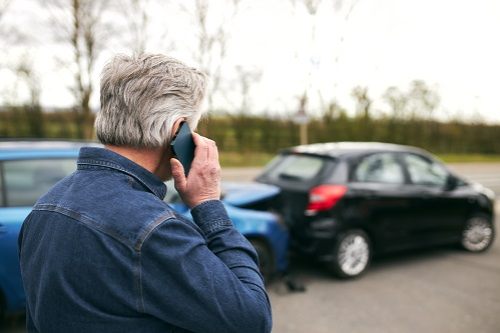


Does insurance cover accidents in a parking lot?
Yes. Auto insurance covers parking lot accidents, but the coverage that applies depends on who caused the accident, what was damaged and which coverages each driver carries. Liability does not pay to repair the at-fault driver’s car.
Here are a few common scenarios that might occur in a parking lot and how insurance plays a part:
- You pull out of your parking spot and hit another car. In this case, since you are at fault, the liability portion of your insurance would pay for the damage to their vehicle. Collision coverage will pay for damage to your vehicle, if you have it.
- Someone hits your car and leaves. Hopefully, they left a note with their contact info. If not? “Best to file the claim with your carrier and let them do the investigation,” Arnoldy says. “If you carry collision coverage, you will have the protection, subject to deductible. If your insurer is successful in finding the at-fault party, your deductible will likely be recouped. Check for cameras in the lot and seek the assistance of any nearby businesses or residences for footage if possible. It’s best to do this immediately, as some of the footage typically is only stored for a set number of days.”
- You hit a pole or some other structure. First, treat this like any other accident, and don’t just leave. “Your property damage liability limit will pay the damage to the pole, and any damage to your vehicle would be covered under collision coverage if you purchased it,” Arnoldy says. “The collision coverage would be subject to deductible; liability typically has no deductible. Contact the owner of the parking lot to inform them of the situation and provide them your insurance information.”
- You hit a person. Call the police immediately. If the person you hit is injured, your liability insurance will cover their medical bills.
In almost every state, you must have the state legal minimum liability insurance to get on the road. Collision insurance isn’t necessarily required, however – you must opt for this coverage and pay for it. If you’re financing a vehicle, you probably do, as most car loans require full coverage to protect the vehicle. So keep in mind that if you don’t have collision coverage and sustain damage to your car in an at-fault accident, it might not be covered.
What to do in a fender-bender in a parking lot
After a parking lot accident, stop and document the scene before vehicles, witnesses and security footage disappear. Exchange information, photograph the damage and report injuries immediately. If you hit an unattended vehicle, state law requires you to attempt to locate the owner, leave identifying information and report the accident to the police.
Take these steps:
- Document the damage. This means taking pictures and videos of your vehicle, the other party’s vehicle, the surroundings, and anything else pertinent to the accident scene.
- Look for cameras. See if there are security cameras on the premises that might have some footage of the accident.
- Talk to witnesses. Before everyone leaves the scene, make sure to talk to people who saw what happened and are willing to speak to the insurance company and also the police.
- Contact your insurer right away. Most insurance companies have a 24-hour claims hotline so you can call even if the accident happens late at night.
- File a police report (if needed). If your car has only a minor surface scratch, you probably don’t need to call the police. For any major damage that requires a report, call the police non-emergency line. It’s always a good idea to have police there to mediate if the other party involved isn’t cooperative.
- Don’t leave the scene without leaving a note. If you can’t find the owner of a car you have hit, you must leave a note. If you don’t, you could be charged with a hit-and-run accident.
How to determine who is at fault in parking lot accidents
Fault in a parking lot accident depends on right-of-way rules, vehicle movement and evidence. A moving vehicle that hits a legally parked vehicle is usually responsible, although a driver backing out must yield to vehicles and pedestrians already moving through the travel lane. Two drivers backing up at once are not automatically assigned equal fault.
“Generally, if you’re stationary (parked) and the other vehicle is moving and hits your vehicle, they’d be at fault,” says Arnoldy.
“However, if it’s a dual effort and both vehicles are moving, usually each driver and their insurer goes their own way, and it’s seen as a 50/50 situation. There are exceptions to the 50/50 situation when both vehicles are moving. An example would be if one vehicle was driving the wrong way in a marked one-way path.”
The right-of-way rules also apply in a parking lot. For instance, if you’re backing out of a spot, you must yield to the cars in the parking lot lanes and pedestrians.
Evidence will help determine fault. Arnoldy reminds drivers of the importance of gathering as much documentation as possible at the scene of the accident. Some of it you can collect, and some of it the police and insurance company will collect.
“Police reports if the police are contacted, witness interviews if there are witnesses, recorded statements from both drivers, and any potential video footage,” Arnoldy says. “Sometimes, if the insurance companies that are representing the drivers disagree on fault, this can lead to litigation, which is funded subject to your policy’s liability limits.”
Does fault matter for insurance coverage?
Yes. Fault determines whose liability insurance pays for another person’s injuries or property damage. It also influences whether you pay a deductible, whether your insurer pursues reimbursement and whether the accident affects your premium. Collision coverage pays for damage to your vehicle regardless of fault, but your deductible applies.
If you’re at fault for the accident, the other driver can file a claim against your insurance policy. That means your insurance will cover the damages caused by the accident. Your liability coverage pays for the damage to their vehicle, and there’s no deductible. For the damage to your vehicle, your collision insurance pays, and there is a deductible. Being at fault also means you’re looking at an increase in your insurance rates, unless you have the accident forgiveness feature on your policy.
The claims process will involve assessing the damage to both vehicles, which may take some time. A claims adjuster will do the legwork on this, but your job is to comply with all deadlines in a timely manner. Provide as much documentation as you can to keep the process running smoothly. Depending on your coverage limits and whether or not they’re enough to cover the damage to the other person’s property, a settlement will be reached.
If the other party is at fault, you can file a claim against their insurance, and the same process will follow. There will still be phone calls and deadlines to meet, most of which will be facilitated by the claims adjuster assigned to the case. Cooperation is key to getting your insurance check promptly. The only time you may not get a payout from their insurance is if they don’t have any, in which case, your collision or uninsured motorist coverage kicks in.
Do insurance rates increase after parking lot accidents?
A parking lot accident may increase your premium if you caused the crash or your insurer paid a chargeable claim. The result depends on the claim amount, fault decision, driving history, state insurance rules and company rating practices. Filing a claim does not automatically mean your rate will increase, but at-fault claims usually do increase rates.
An exception to this is if you have accident forgiveness on your insurance policy. Some policies have a feature where an accident will not be factored into your insurance costs, whether you’re on the road or in a parking lot. It will still be on your driving record and may be factored into a different insurer’s rate calculations, but not with your current policy. There are almost always exclusions for serious incidents.
Frequently asked questions
What should you do if you hit a pole in a parking lot?
Stop and report the damage to the property owner or business. Take photos and provide your insurance information. Property damage liability pays for covered damage to the pole, while collision coverage pays for damage to your car, minus your deductible. Do not leave without reporting the accident.
Do insurance companies check parking lot cameras?
Yes, the footage from security cameras can be valuable in determining what happened in an accident. The property owner controls the footage and may not share it without permission or a legal request. Ask the business to save the video right away, since systems often overwrite older recordings.
Can you get a ticket for an accident in a parking lot?
No. You can’t get a ticket solely for being involved in an accident. However, police can issue a ticket if the accident involved a violation of the law, such as reckless driving, leaving the scene or failing to report an accident.
Does my deductible apply in a parking lot accident?
Yes, deductibles apply in parking lot accidents. If you file a collision claim and receive an insurance payout, you are responsible for the deductible.

 Helpful auto insurance tools and calculators
In case you missed it
Stay updated with our latest insurance insights and guides
 September 7, 2026
A higher deductible means lower risk for the insurance company; you share...
Read article August 10, 2026An at-fault accident affects car insurance rates for three to five years....
Read article June 25, 2026Parked car insurance, or storage coverage, is comprehensive-only coverage that prevents a...
Read article May 19, 2026File a car insurance claim promptly, follow your insurance company’s instructions and...
Read article April 30, 2026To get car insurance for the first time, compare quotes online, choose...
Read article April 6, 2026Car insurance is tax-deductible if you use your vehicle for business, such...
Read article February 27, 2026Insurance companies have to follow state laws when it comes to rates...
Read article