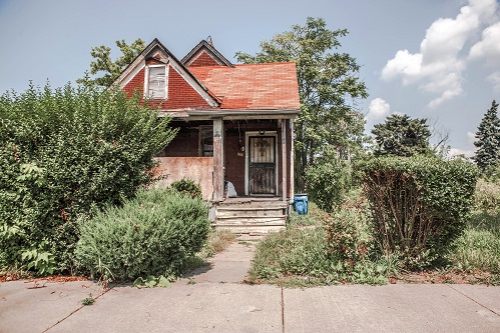

Can homeowners insurance drop you?
Yes, your homeowners insurance company can drop you, but only for specific reasons permitted under state law. Mid-term cancellations are generally limited to non-payment of premiums, fraud or misrepresentation, and substantial increases in hazard at the property. At renewal, insurers have broader grounds, including claims history, roof age, credit, and location risk. The company is required to notify you in advance and provide a reason so you have time to find replacement coverage.
If you’ve received a notice of home insurance cancellation (or a nonrenewal notice), it’s important to look at why before you take steps to get new insurance.
The reason for your cancellation directly determines your options. If your insurer left your area or deemed your location too high-risk, you may need to apply through your state's FAIR Plan or a surplus lines insurer. If cancellation was for poor maintenance, completing the required repairs and providing documentation to a new insurer is the path to standard coverage. If it was for non-payment, reinstatement with your current insurer may be possible if you pay the outstanding balance within the grace period.
It’s important to know that home insurance companies won’t just drop you for no reason. You’re entitled to know the reason and be given time to find new coverage.
10 reasons home insurance companies can drop you
The most common mid-term cancellation reasons are non-payment of premiums and misrepresentation on the application, where the insurer discovers the property's actual condition differs from what was stated. Nonrenewals happen for a much broader set of reasons, including claims history, roof age, credit changes, location risk and the company leaving an area. According to Bach, these are the conditions insurers most commonly cite when ending coverage before or at term expiration.
Nonrenewals may happen for a much broader list of reasons.
In 2026, we surveyed homeowners to find out how many had faced a cancellation or nonrenewal and asked them the reasons. Percentages are rounded to the nearest whole number. Of the people who lost coverage:
- 10% had too many claims
- 7% didn't pay premiums on time
- 12% had maintenance issues on their property
- 20% live in a high-risk area
- 14% had an issue with the age or condition of their roof
- 22% said the company no longer operates in their area
- 1% lied on their application
- 16% said they don't know the reason
Here are 10 reasons you might find yourself with a homeowners insurance cancellation notice arriving in the mail.
Non-payment
Non-payment is the most common reason for an insurance policy to be canceled mid-term. If payment is not received, you generally have 10 days' notice before the policy is canceled.
What to do: If your policy is cancelled for non-payment, contact your insurer immediately. Many insurers allow reinstatement within a short window if you pay the overdue balance in full. Waiting too long may require you to apply for an entirely new policy, which could result in higher rates. To avoid future lapses, set up automatic payments or roll your premium into your mortgage escrow account.
You provided false information on the application
You’re expected to provide truthful and accurate information to the best of your knowledge when applying for insurance. If you put something on the application that wasn’t true, the insurance company is within its rights to drop you.
For example, if you stated on your application that you replaced the roof three years ago, but it is 20 years old, your insurance company has the right to cancel the policy because they were given false information that would have affected the original underwriting decision.
What to do: If your policy is canceled for false information, the insurer is unlikely to reverse the decision. Immediately start shopping for new coverage, and my upfront and honest on your application.
Poor property maintenance
You can get your home insurance cancelled for underwriting reasons after an inspection (in this case, it will be a nonrenewal) if the insurance company finds you have failed to keep your property in good condition. Disrepair increases the odds of a claim, and you’re required by your policy contract to do everything you can to prevent a claim.
For example, the porch could collapse if you ignore rotting, sagging wood on your front porch. It could result in an injury or further damage to the house. Your insurance company might decide that it doesn’t want to take on that risk and instead decide not to renew your coverage.
What to do: Complete repairs as quickly as possible and request that the insurance company reconsider the nonrenewal once repairs are done. If you're unable to complete the repairs, request quotes from specialty insurance companies that provide coverage for harder-to-insure properties.
Multiple claims
Your homeowners insurance can be nonrenewed if you file too many claims, though insurers generally cannot count weather-related claims toward that threshold under most state laws. Non-weather claims, such as fire, water damage from internal sources, or liability incidents, are typically eligible for review and can result in nonrenewal if the insurer judges your home to be a poor risk.
Say, for example, you filed a claim last year because a tree fell on your deck. Six months later, you filed another claim when your kitchen caught fire. And another six months later, you file a claim for a burst pipe. Your insurance company might conclude that your home is a bad risk; things are not in good shape and the risk of another claim being filed is too high.
What to do: If your policy is nonrenewed because of too many claims, you will likely have to seek out high-risk homeowners insurance with a specialty insurance company. After three years claim-free, you can re-apply with a standard company.
The age of your roof
Insurers can cancel or nonrenew your homeowners insurance if your roof is too old or in poor condition. Many insurance companies will not insure a roof older than 20 years because aging roofs are more likely to leak or sustain storm damage, exposing the insurer to a large claim.
What to do: If your insurance is being nonrenewed because of the roof's age, ask if you can have the roof inspected to confirm its condition; if it's still in good condition, the insurance company may reverse the nonrenewal. If not, the insurer may agree to cover the roof at actual cash value rather than replacement cost to keep the coverage in place. Replacing the roof, while expensive, will prevent further insurance issues.
Poor credit
A credit score drop alone is unlikely to trigger cancellation, but insurers may factor it in at renewal alongside other risk signals such as recent claims or property maintenance issues. If your policy is non-renewed and credit is listed as a contributing reason, improving your credit and addressing other risk factors may help you qualify for standard coverage at renewal.
What to do: To keep your credit from impacting your home insurance, make payments on time, reduce revolving lines of credit and review your credit report regularly to watch for errors.
Living in a high-risk zone
Insurers frequently non-renew policies when a home's location becomes too high-risk to cover at standard market rates. The most common location-based reasons for nonrenewal are a high risk score assigned to the property, proximity to a coast, location within a Wildland Urban Interface area, and history of regional disasters such as wildfires or hurricanes. When insurers pull back from an entire area, all policyholders in that area may receive nonrenewal notices regardless of their individual claims history.
“For nonrenewals, the most common reasons today are the risk score assigned to the home, the fact the home is located in a coastal area or a Wildland Urban Interface area, or any region that's been impacted by a disaster in recent years,” Bach says.
For example, if there have been more wildfires in your area, causing more damage than in past years, the insurance company may decide the risk of insuring your home has grown too high and non-renew your policy.
What to do: If your home insurance is nonrenewed due to local risk, reach out to a local agent to help you find a carrier writing new policies in your area. If necessary, reach out to your state's FAIR plan or state insurer of last resort.
Pets
Insurance companies restrict the type of pet you can have in your home to guard against liability claims. Most insurance companies won’t cover exotic pets, but some have rules about specific dog breeds or dogs with a bite history. The company can choose to exclude a pet from coverage or decide not to insure you at all.
Having a dog with a bite history, particularly one not disclosed on the application, gives an insurer grounds to cancel your policy. Many insurers also restrict or exclude coverage for specific dog breeds considered higher liability risks, including pit bulls, Rottweilers, and German Shepherds, though breed lists vary by company. Failing to disclose a restricted breed or bite history at application may be treated as misrepresentation, giving the insurer grounds for mid-term cancellation.
What to do: If your pet is the reason for nonrenewal, start looking for quotes from other companies; not all carriers have breed restrictions.
Age of property
As homes get older, the risks associated with insuring them increase. Wiring, plumbing and other systems become outdated and the risk of a fire or other major claim becomes greater.
Insurers may non-renew homes that exceed a certain age because older electrical, plumbing, and HVAC systems carry a higher risk of fire, water damage, and major claims. The age threshold varies by insurer and state.
What to do: If your policy is nonrenewed due to the age of your home, ask your insurer whether updating specific systems such as wiring, plumbing, or the roof would allow reinstatement. If standard coverage is no longer available, a policy designed for older or historic homes, or coverage through a surplus lines insurer, may be an option.
The company is leaving your area
Our survey found that the company leaving the area is the most common reason for a nonrenewal. As some areas become more prone to major storms and wildfires, insurance companies are responding by pulling back in those areas. In this case, it’s not just you being dropped by the insurance company but all of their customers in that area. That’s been happening more frequently in Florida and California due to enormous losses in those areas.
There are also cases where insurance companies in a certain area go out of business, canceling all policies.
What to do: When your insurer withdraws from your area entirely, there is generally no way to retain that policy. Your priority is finding replacement coverage before the cancellation date to avoid a lapse. Start by shopping standard market insurers; if your location is too high-risk for standard coverage, contact your state's FAIR Plan for last-resort coverage or ask an independent agent about surplus lines options. If you have a mortgage, notify your lender immediately: if coverage lapses, the lender can place force-placed insurance on the home, which typically costs more and covers less than a standard policy.
Cancellation vs. nonrenewal: The difference and why it matters
Cancellation ends your policy before the term expires, while nonrenewal means the carrier will not renew your policy at the end of the term. Both result in loss of coverage, but the reasons for which each can be applied and the timeline for coverage ending differ.
| Cancellation | Nonrenewal | |
|---|---|---|
| When it happens | Before the end of the policy term | At the end of the policy term |
| Permitted reasons | Non-payment, fraud, material misrepresentation | Change in risk on the property or in the area, coverage availability |
| Notice requirements | 10 to 30 days, depending on the state | 30 to 60 days, depending on the state |
| Your rights | Must receive written notice, may dispute | Must receive written reason, may dispute |
| Mortgage lender impact | Lender notified, new coverage must be obtained by cancellation date | Lender notified, new coverage must be obtained by renewal date |
Methodology
In the spring of 2026, we surveyed 1,500 people with home insurance. The survey was conducted for Insurance.com by Dynata. We asked homeowners if they had received a notice of cancellation, and for the reason given. Reasons listed on the survey were:
- Because I had several claims
- Because I didn't pay my premiums on time
- Because of maintenance issues on my property
- Because I live in a high-risk area
- Because of the age or condition of my roof
- Because the company no longer operates in my area
- Because I lied on my application
- I don't know

 Helpful home insurance tools and calculators